

Introduction
In today’s data-driven digital landscape, understanding how to obtain web content reliably and authentically is essential for developers, marketers, and online sellers. Picture a scenario where you need to monitor product prices across multiple regions or validate ad placements—traditional IPs may get flagged, throttled, or blocked, disrupting your workflow. That’s where a residential proxy steps in, enabling seamless access while appearing to originate from a real user connection.
Imagine your scraping tool routing a request not through a data center, but via an IP tied to a genuine household ISP. This disguises automation as human browsing, reducing detection risk and enabling access to geo‑specific content. For instance, a marketer conducting local SERP analysis can retrieve region‑specific search rankings by rotating through city‑level proxies, ensuring more accurate insights and minimizing blocking. Residential proxies are increasingly preferred by e‑commerce teams tracking competitor pricing or sellers managing multiple storefronts—because they mimic legitimate user traffic.
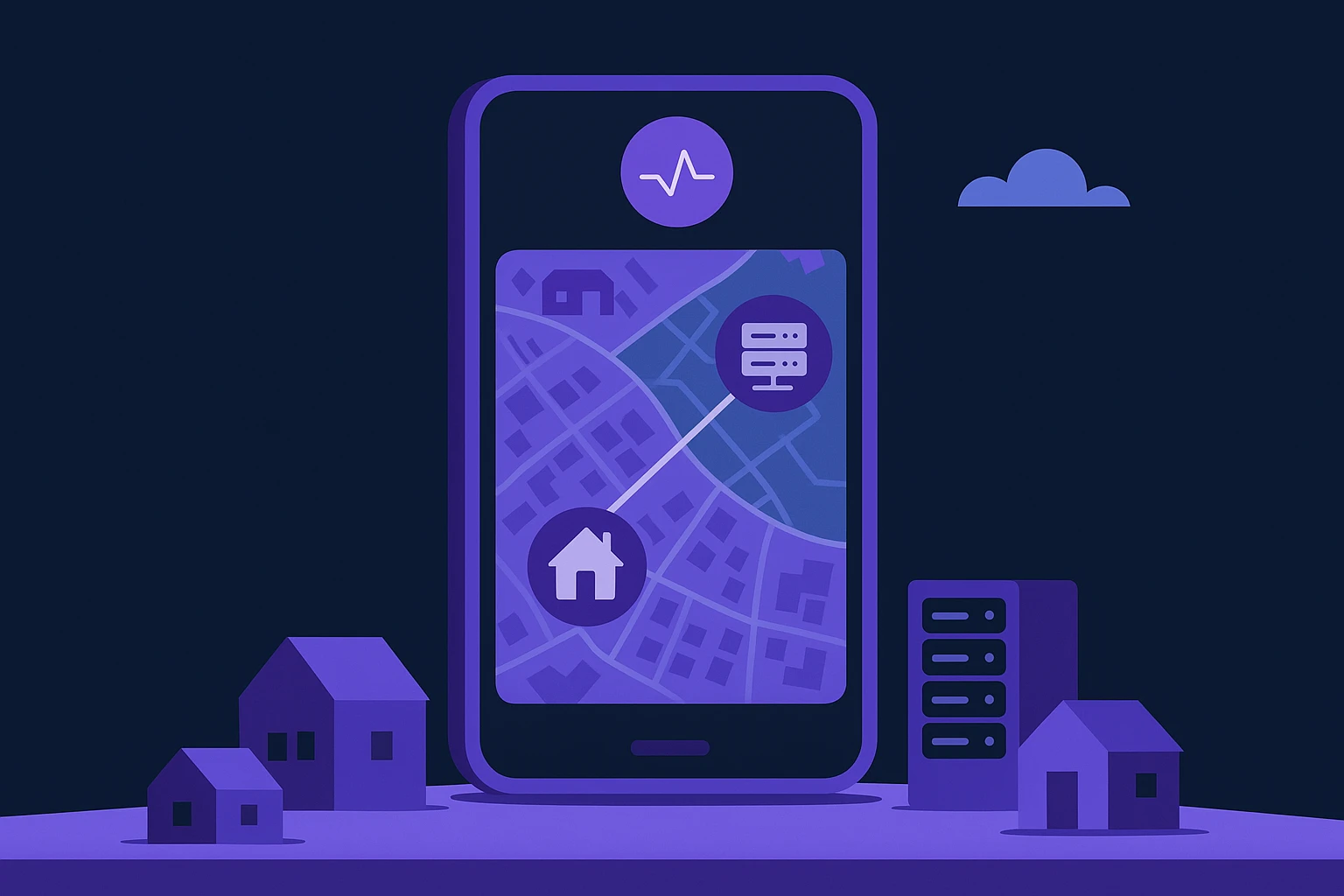
At its core, a residential proxy is an intermediary server that channels your requests through an IP assigned to a real consumer device by an ISP. The target site perceives the request as originating from a household user rather than an automated bot, improving trust and reducing friction in tasks like scraping, ad validation, or account management. The process works by passing your request through a proxy provider’s gateway, which selects an available residential IP from a large pool and forwards the response back to your system seamlessly Syphoon’s guide and Dexodata's overview.
To put this in practical terms, say an SEO analyst needs to verify localized search results across ten cities. With a residential proxy network offering city-level targeting, each request can appear to come from a different real‑user location. This enables precise benchmarking while evading IP-based restrictions. Similarly, an online seller tracking stock levels on competitor sites can avoid being blocked by rotating through residential IPs, preserving continuity in data collection and preventing account or session bans.
In real-world deployments, users may choose between static (sticky) residential proxies—ideal for workflows requiring consistent identity, such as session‑based logins—or rotating residential proxies, which offer fresh IPs per request for high-volume scraping and large-scale monitoring. This flexibility allows developers and marketers to align network behavior precisely with workload demands.
Understanding Practical Applications and Strategic Value
Continuing from workflows requiring consistent identity or high-volume rotation, this section delves into how organizations leverage residential proxies to solve complex real-world challenges. To illustrate practical scenarios, we explore three key use cases—each reflecting how proxies support different goals across development, marketing, and online selling.
Dynamic Pricing & Local Market Intelligence
For e‑commerce platforms and price‑monitoring teams, accessing localized pricing and promotions is vital. A travel aggregator, for instance, may need a residential proxy in Tokyo to capture region‑specific discounts not visible to global or datacenter IPs. Through targeted city‑ or ZIP‑level routing, these teams can emulate local user behavior and avoid anti‑scraping defenses, ensuring accurate market data acquisition AIMultiple’s 2026 use‑cases overview aimultiple.com.
SEO Monitoring and Regional Ad Verification
SEO practitioners often require geographically accurate SERP data to assess keyword performance across markets. Residential proxies enable ranking checks from real local IPs, covering features like local pack, snippets, or AI overviews ResidentialProxy.io’s use‑cases hub residentialproxy.io. Similarly, ad verification workflows depend on residential IPs to confirm that creatives render correctly across targeted cities and devices, avoiding discrepancies caused by data‑center detection.
Retail Automation & Account-Driven Checkout Flows
For online sellers automating multistep processes—such as cart monitoring or limited-edition drops—residential proxies ensure both authenticity and session continuity. One retail analytics team switched from flagged datacenter IPs to rotating residential ones and expanded their operations across 40 markets without extensive code changes, achieving a ~96.8% request success rate Proxora case study proxora.io. Another sneaker‑automation team doubled checkout success and reduced IP costs by about one‑third through a mix of rotating residential and mobile proxy sessions.
Actionable Best Practices
- Match proxy strategy with task type: use rotating proxies for broad crawling and data collection, and sticky sessions for multi-step interactions or login flows.
- Leverage geo‑targeting by city or ZIP for nuanced insights—essential for localized pricing, SEO, and ad checks.
- Continuously monitor success metrics (e.g., request success rate, latency) to adjust proxy configurations and maintain reliability.
Comparison of Use Cases
| Use Case | Proxy Strategy | Key Benefit |
|---|---|---|
| Dynamic Pricing & Local Intelligence | Rotating, city‑level targeting | Accurate localized pricing without blocks |
| SEO & Ad Verification | Stationary or rotating per task, device‑aware | Validates regional rankings and ad delivery |
| Retail Automation & Checkout Flows | Sticky rotating residential/mobile mix | Improved session reliability and conversion |
Seamlessly bridging from the previous discussion of sticky versus rotating models, these applications demonstrate how choosing the right proxy behavior optimizes outcomes. Understanding both what is residential proxy and how its attributes fit specific workflows instructs better architecture for development, marketing, and selling workflows—effectively aligning network access to real operational needs.

How Residential Proxies Work
Residential proxies function by routing your internet requests through intermediary IP addresses assigned to real residential devices. These IP addresses are provided by Internet Service Providers (ISPs) and are associated with actual geographic locations, enhancing their reliability and authenticity. This setup allows users to mask their true IP address with one that appears genuine, thereby avoiding detection by sophisticated systems that might otherwise block non-residential IPs.
The key advantage of using a residential proxy is the ability to bypass IP-based restrictions. For instance, some websites and services employ geo-blocking, which restricts access based on the user's location. By connecting through a residential proxy, users can choose an IP address from their desired location, gaining access to region-specific content. This capability is particularly valuable for marketers running global advertising campaigns who need to view ads as they appear in various regions.
Practical Applications of Residential Proxies
Residential proxies have numerous applications across different industries. Online sellers, for example, often utilize these proxies for price comparison and market research. By impersonating users from various locations, sellers can ensure competitive pricing. Developers, on the other hand, might use residential proxies for testing geo-targeted applications, simulating user experiences from different regions to ensure seamless performance worldwide.
Moreover, platforms like Soxy.pro offer comprehensive solutions for employing residential proxies efficiently. By providing a wide array of IP addresses from around the globe, Soxy.pro enables businesses to streamline their operations, from managing multiple accounts to conducting in-depth market analysis.
Advantages of Residential Proxies
In addition to bypassing geo-restrictions, residential proxies offer enhanced anonymity and security. Because these IP addresses are linked to legitimate residential addresses, they are less likely to be flagged or blocked, ensuring consistent access to targeted resources. For example, some companies use residential proxies to scrape data without triggering alarms set by anti-scraping measures.
According to DataProvider.com, residential proxies play a critical role in data gathering and competitive intelligence, protecting the integrity of automated activities while minimizing the risk of exposure. Such robust functionality makes residential proxies a preferred choice for professionals in tech-savvy industries where reliable data and market insight are paramount.
Advantages and Use Cases of Residential Proxies
Residential proxies offer a range of advantages that make them invaluable tools for developers, marketers, and online sellers. One key benefit is their ability to provide anonymity and security through IP addresses that appear as authentic residential connections. This prevents websites from easily detecting and blocking web scraping or automated activities. For businesses engaged in competitive analysis, residential proxies allow them to gather real-time market data without location-based restrictions.
Real-World Applications
Consider an example where a digital marketer employs residential proxies to access region-specific website content and advertisements. By routing requests through local IPs, marketers can view how their products are advertised in different locations, improving the customization of ad campaigns. A similar advantage applies to e-commerce businesses. By using residential proxies, they can test their websites’ user experience from different geographic locations, ensuring optimized load times and functionality for global customers.
Data Security and Compliance
In fields like fintech, where data integrity and compliance are critical, residential proxies provide a reliable way to perform secure transactions. By masking the originating IP address, companies can prevent DDoS attacks and unauthorized access attempts. Real-world examples include financial institutions conducting online threat assessments to ensure their networks remain resilient against cyber threats. Maintaining robust data security protocols with residential proxies helps organizations adhere to evolving privacy regulations, such as GDPR and CCPA.
Scalability and Performance
Scalability is another significant advantage of residential proxies, making them ideal for businesses that require high-volume, automated tasks. For instance, a company engaged in expansive web scraping operations could leverage residential proxies to maintain uninterrupted access to target websites, sidestepping rate limitations imposed by those sites. This scalability ensures efficient data collection, even with increased demand. By understanding what is residential proxy, businesses capitalize on their scalability benefits, achieving consistent performance and operational growth.
Overall, residential proxies hold strategic importance across various sectors. Their ability to deliver secure and compliant web access makes them integral to modern digital frameworks. As businesses and research institutions continue to expand their online footprints, the adoption of residential proxies is likely to grow, driven by the need for enhanced privacy, cost-efficiency, and global outreach.
According to GeoSurf's insights, the global demand for residential proxies has risen sharply, a trend fueled by the ever-expanding need for secure, scalable internet solutions in data-driven industries.
Conclusion: Taking Advantage of Residential Proxies
The increasing complexity and demands of online activities make residential proxies an invaluable tool for developers, marketers, and online sellers. These proxies offer unique advantages such as preserving anonymity, enhancing security, and enabling access to geographically restricted content. By adopting residential proxies, businesses can efficiently manage data requests while reducing the risk of being blocked.
An understanding of what is residential proxy allows companies to navigate the competitive and ever-evolving digital realm effectively. For instance, marketers can use residential proxies to conduct market research and monitor competitor activities without being detected. Similarly, online sellers can expand their reach by accessing region-specific markets, enabling personalized marketing strategies.
As residential proxies become increasingly essential, staying informed about the latest advancements and best practices is crucial. Businesses should explore different proxy providers, evaluating the benefits each offers. Ensuring a reliable service that guarantees speed and efficiency should be a priority, allowing users to harness the full potential of these proxies.
To optimize your use of residential proxies, consider partnering with a trusted provider like Soxy.pro. They offer robust solutions tailored to diverse needs, ensuring secure and efficient data routing. Leveraging such resources can significantly enhance business operations, making them not just a tool, but an integral part of strategic planning.
In conclusion, embracing the functionalities of residential proxies can lead to substantial gains in productivity, marketing intelligence, and online engagement. By taking informed steps towards integrating these tools, you can ensure your business remains competitive and innovative in the digital age.